Goldendoodle Photography: Why Doodles Are Actually Challenging to Photograph
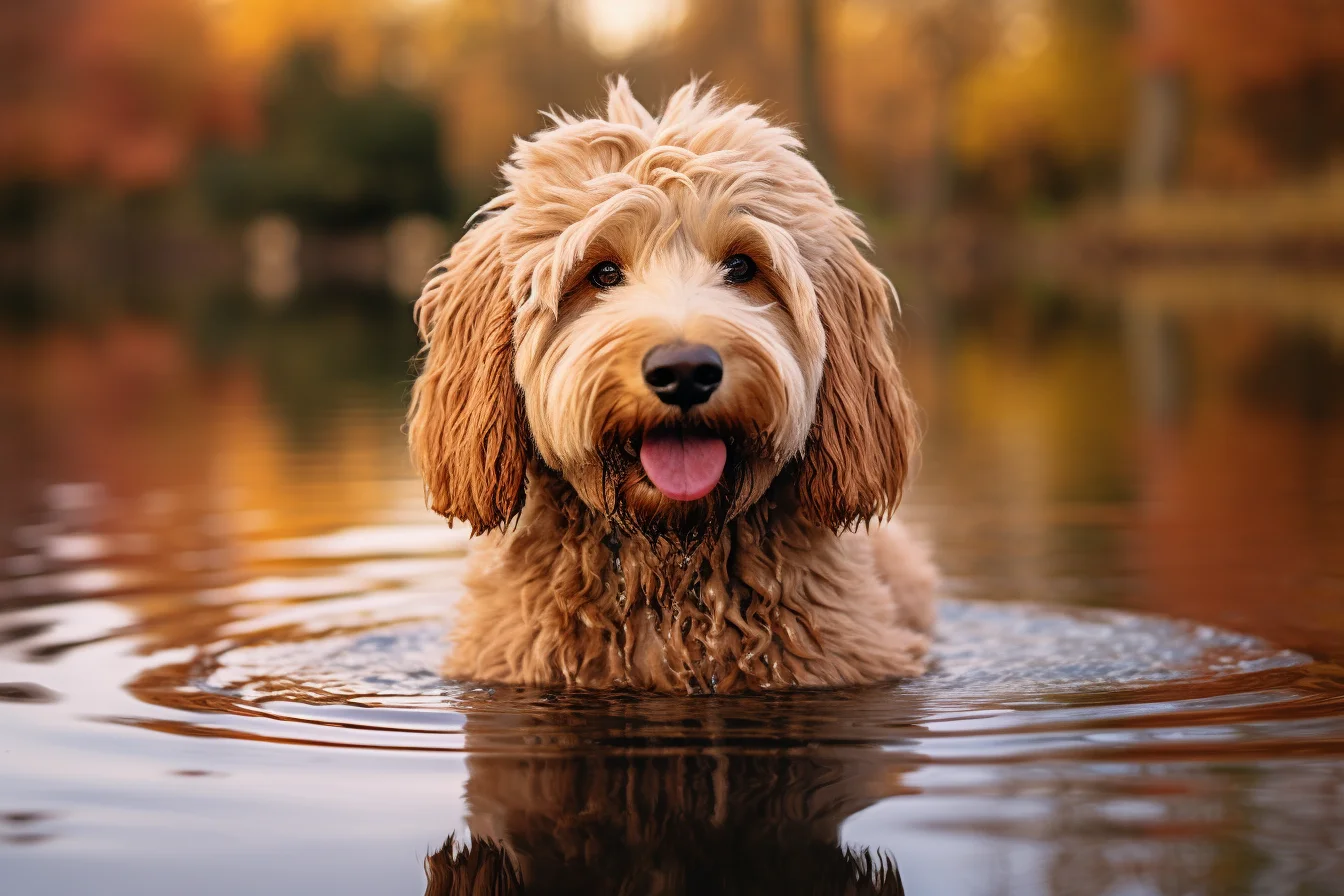
I photograph a lot of goldendoodles. They're everywhere on the South Shore — the most popular crossbreed in Plymouth and Norfolk County by a wide margin. And I'm going to tell you something that most dog photographers won't: they're genuinely hard to photograph well. Not impossible. Hard.
The doodles in my portfolio look amazing. The doodles in amateur photos often look like a blob of fur. The difference isn't the dog. It's understanding what makes this breed specifically challenging and having solutions prepared before the session starts.
Problem 1: The Coat in Flat Light
A golden retriever's straight fur catches light cleanly from almost any angle. A doodle's curly or wavy coat needs specific lighting to look intentional rather than shapeless. In flat, overcast light — or worse, direct frontal flash — the curls compress into a flat mass. You lose all the texture that makes the coat beautiful. The dog looks shapeless.
The solution is rim lighting: positioning the sun behind and slightly to the side of the dog. This catches each curl individually and creates the “halo” effect that makes doodle portraits look like professional magazine work. It requires timing (the first 90 minutes after sunrise on clear days) and deliberate positioning that most photographers don't bother with.
I plan every doodle session around this window. If the conditions don't allow rim lighting, we schedule for a different day. The coat is too important to compromise on.
Problem 2: High Energy and Focus
Goldendoodles and labradoodles often have extremely high drive. Some of them are nearly impossible to position for even two consecutive seconds. I've photographed doodles who physically couldn't stop moving — not disobedient, just wired. Standard treat-based positioning techniques don't work when the dog's arousal level is too high to focus on food.
My approach: don't fight it. The first 15–20 minutes of every high-drive doodle session, we do exactly what the dog wants to do. Run. Chase toys. Sniff everything. I follow the dog with the camera and get some running shots — often great ones — while the energy burns off. By the time we start working on deliberate positioning, the dog can actually focus on me.
The other tool: very high value treats. Regular kibble does nothing for a stimulated doodle. Freshly cooked chicken, cheese, or hot dog pieces at a level the dog almost never gets — that's what gets attention.
Problem 3: The Face
This one surprises owners. Doodle faces, photographed straight-on in flat light, can look indistinct — the eyes disappear into the surrounding fur, the nose blends with the face, and the expression becomes unreadable. It looks like a stuffed animal, not a real dog.
Three things fix this: (1) shooting from slightly below the dog's eye level to create natural upward eye contact, (2) using the rim lighting I described earlier to separate the eye from the surrounding fur with a catchlight, and (3) timing the shutter to the moment between the dog looking forward and looking away — that specific transition is where expressions live.
A well-executed doodle face shot shows warm, intelligent eyes, a distinct nose, and an expression that reflects the dog's actual personality. That's what the owner sees when they look at their dog — and that's what the portrait should show.
Which Settings Work Best for Doodles on the South Shore?
Open, bright settings work best for high-energy doodles because higher light levels allow faster shutter speeds — the technical prerequisite for sharp images of a moving dog. Beaches are ideal: Duxbury Beach, Scituate shores, Cohasset. Simple backgrounds also prevent the busy coat texture from competing with a complex environment.
For calmer doodles or dogs who aren't water-oriented, forest and meadow settings at Wompatuck State Park or Borderland State Park work well — the soft bokeh background from forest depth complements the coat texture rather than competing with it.
Photographing a doodle on the South Shore?
Sessions start at $395. I know exactly how to handle the energy, the coat, and the face. Let's talk about your dog.
See the doodle photographer page →Photographing a different breed? Browse every breed I shoot for the full lineup.
Related guide: Bernedoodle Photographer on the South Shore — how bernedoodles differ from goldendoodles on session — coat color, build, and temperament considerations.
“It was so fun and easy to work with Chris, and our dogs loved him, too! The photos and artwork are beautiful! Highly recommend booking a session.”
About the Author
Chris McCarthyProfessional Dog Photographer · Rockland, MA · 11+ years experience
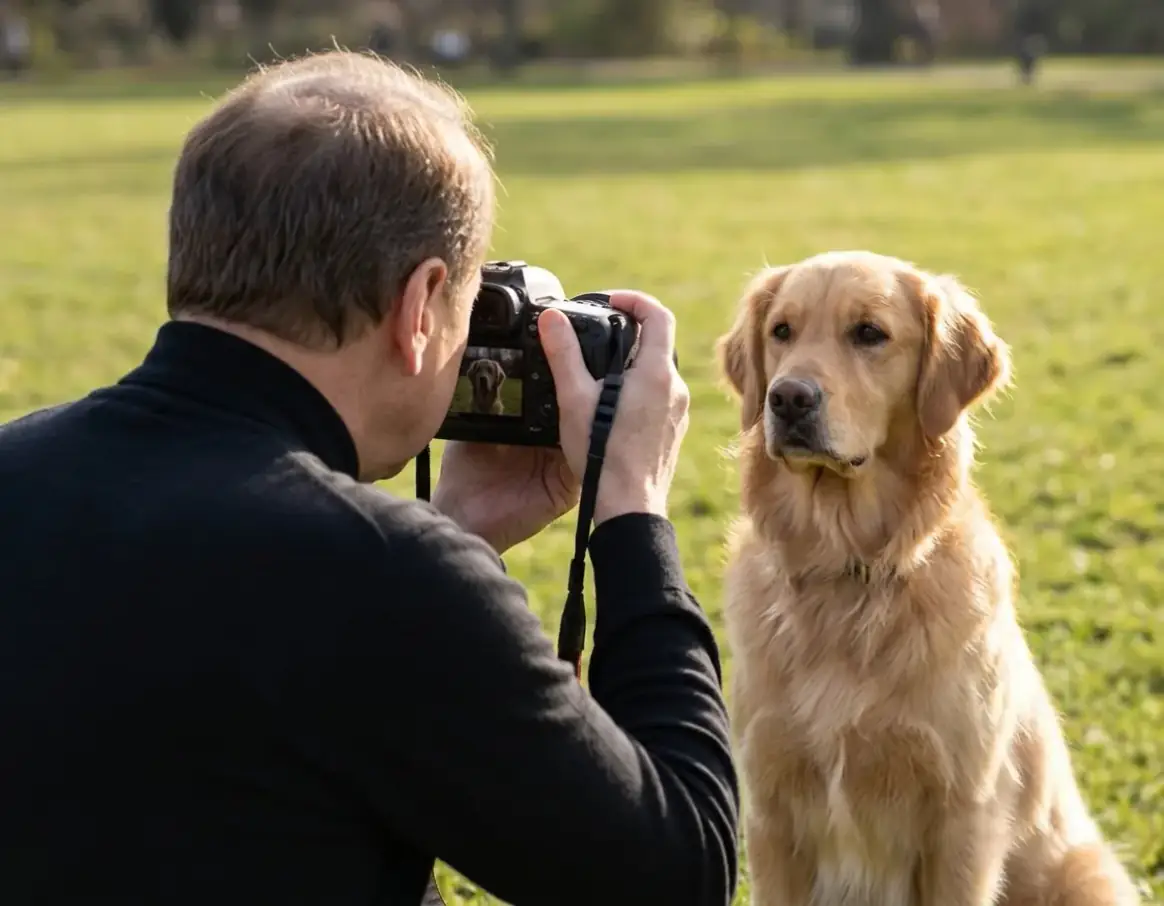
I've photographed hundreds of dogs across the South Shore and Greater Boston since 2014 — every breed, size, age, and temperament. My own rescue, Sully, was reactive and anxious when I got him, and working with him every day taught me how to photograph dogs that other photographers find difficult. I specialize in reactive and shy dogs, seniors, and memory sessions — the sessions that matter most and need the most patience.