Photographing Three or More Dogs Together
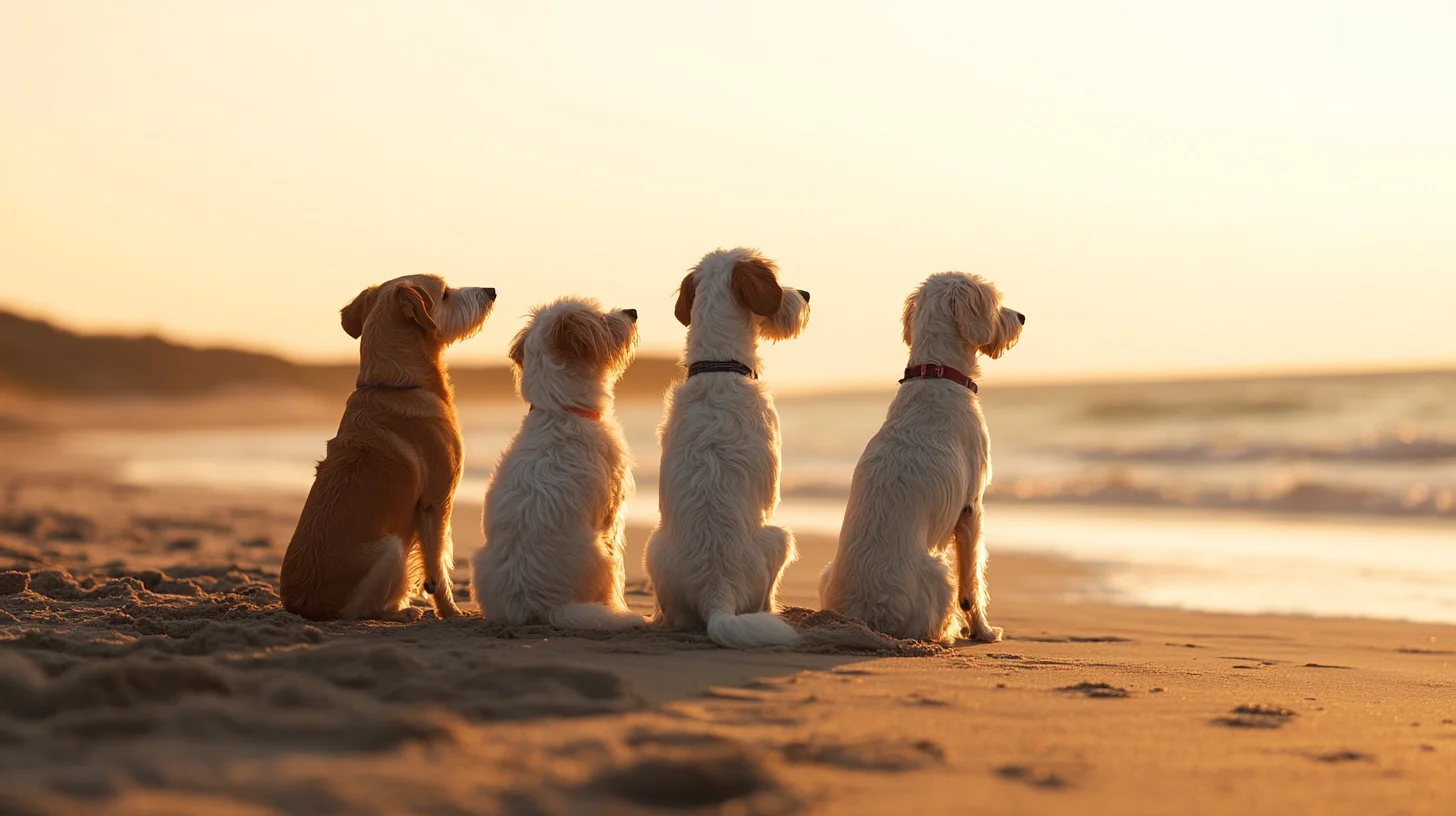
Two dogs in a portrait is a project. Three dogs is a negotiation. Four dogs is barely controlled chaos — and I mean that affectionately. Multi-dog households are some of the most fun and most technically demanding sessions I do, and the portraits that come out of them when everything clicks are genuinely irreplaceable. They don't just show each dog — they show the pack, the dynamic, the specific relationship between dogs who share a life together. Here's how I approach sessions with three or more dogs.
The Geometry Problem
Getting three or more dogs in the same frame with all faces visible, all eyes open, no dog blocked by another, and at least some semblance of a coherent composition — the geometry alone is hard before you factor in that none of them can be directed, positioned for more than a few seconds, or relied upon to stay where you put them.
I approach the geometry problem by looking for natural configurations rather than imposing artificial ones. Some dog groups have a natural stacking tendency — they gravitate toward the same spot, cluster together, arrange themselves in ways that are actually usable compositionally. I observe this during the opening 20 minutes of the session before I try to work with it. Where do they naturally bunch? Which dog tends to position themselves in front? Which one moves to the side?
Steps, rocks, slopes, and elevated surfaces are extremely useful for three-dog compositions. Elevation creates natural vertical separation that solves the blocking problem — a dog on a step above the others has their face visible regardless of where the lower dogs are positioned. I scout locations specifically for these features when I know a session will involve three or more dogs.
The down-stay configuration — all dogs asked to lie down in proximity — is often the most achievable group composition for larger numbers. It lowers energy, reduces the urge to move, creates natural body contact between dogs, and puts faces closer to the same horizontal plane. Three dogs in a relaxed down-stay with good light produces a portrait that is intimate, warm, and compositionally clean in a way that a standing three-dog group rarely achieves.
Managing Energy Across the Pack
In every multi-dog household, there's a dynamic. There's an instigator — the dog whose excitement triggers excitement in all the others. There's a calm anchor — the dog whose settled state tends to bring the energy level of the group down. There's usually a wildcard who does something completely unpredictable at the moment when everyone else has finally settled. And there's often a follower who takes their cues entirely from one of the other dogs rather than from me or the handler.
I spend the first 20 to 30 minutes of a multi-dog session reading this dynamic before I try to work with it. Who settles whom? Who gets whom excited? Where should the instigator be positioned relative to the anchor to reduce mutual stimulation? Which dog should be positioned on the outside of the group configuration to minimize opportunities for them to step in front of the others?
Understanding the pack hierarchy also helps. In most multi-dog households, there's a clear social order — dogs who are comfortable positioned close together versus dogs who need a bit more space, dogs who will defer to another versus dogs who will compete for position. Working with the natural hierarchy rather than against it produces calmer, more relaxed group compositions. Forcing a subordinate dog into a dominant position relative to the pack leader creates tension that shows in both dogs' body language.
Individual Portraits First — Always
Every multi-dog session I run begins with individual portraits of each dog. This is not optional and it's not just about having solo images to deliver — it serves a specific function in setting up the group work that comes later.
Photographing each dog individually first burns off some of the initial session energy for each dog before they have to perform in the more demanding group configurations. A dog who has already had their own 15-minute photography session — their own treats, their own attention, their own expressions recorded — arrives at the group work with lower novelty excitement and a better understanding of what the session involves.
The individual work also gives me essential information about each dog's responsiveness, treat motivation, attention triggers, and energy level. By the time I'm working on the group compositions, I know which dog responds to which sound, which dog's attention will wander in which direction, and which dog will be the challenge in the group configuration. I can plan the group work around what I learned individually.
And for many multi-dog families, the individual portraits end up being the images they display most prominently. Each dog has their own portrait — their own character captured — and then the group image shows them together. The combination of individual and group portraits from a single session is one of the most complete representations of a multi-dog household you can create.
The Candid Group Moment
The best multi-dog portraits are rarely the posed ones. They're the moment one dog turns to look at another and both of them happen to have great expressions simultaneously. They're the moment they all look up at something at the same time — that synchronized attention that happens naturally in a bonded pack when something catches the group's interest. They're one dog starting to clean another's ear. They're the pile of sleeping dogs in a quiet moment between active shooting.
These unscripted group interactions — the real, specific dynamic of that particular pack — are what multi-dog families cherish most in their final galleries. You can fake a posed group portrait to some degree. You can't fake the moment Dog 1 puts her head on Dog 3's back and Dog 2 leans in from the other side. That moment is completely specific to those three dogs and their relationship. It cannot be recreated and it cannot be staged. My job is to see it developing and be ready when it happens.
I stay in a ready-to-shoot state throughout multi-dog sessions for exactly this reason. The candid moments happen between the posed attempts, during the breaks, in the transitions. A photographer who puts the camera down between active shooting configurations misses more of the best multi-dog moments than they capture.
Logistics and Timing — The Practical Realities
Budget an extra 30 to 45 minutes per additional dog beyond two. A two-dog session might run 2 to 2.5 hours. A three-dog session should plan for 2.5 to 3 hours. A four-dog session needs a full 3 hours minimum, and even then the group compositions will be a smaller proportion of total session time than they would be with fewer dogs.
Bring more handlers than you think you need. One handler per dog is the ideal ratio for group work. This is genuinely important — not just helpful. With three dogs and two handlers, one person is always managing two dogs while the other manages one, and the two-dog management invariably produces compromised results for at least one of those dogs in any given configuration. One handler per dog means dedicated attention, independent positioning, and focused engagement for each animal simultaneously.
Separate the dogs between active shooting configurations. Letting three or four dogs run freely between group attempts resets their energy upward and extends the time needed to settle them for the next configuration. Keeping them calm and separated — on leash, with handlers, getting brief individual attention — between group configurations maintains the lower energy level that makes group work possible.
For sessions involving two dogs, the guide on photographing two dogs together covers the foundational techniques in more detail. The principles that work for two scale upward — imperfectly, but recognizably — to three and four. And if you want to discuss the specifics of your household before booking, the Best Dog Ever page explains what a session covers and what it delivers.
Have a multi-dog household you want to photograph?
Sessions start at $395. I love multi-dog sessions — reach out and let's talk through what will work for your pack.
Book a session →“It was so fun and easy to work with Chris, and our dogs loved him, too! The photos and artwork are beautiful! Highly recommend booking a session.”
About the Author
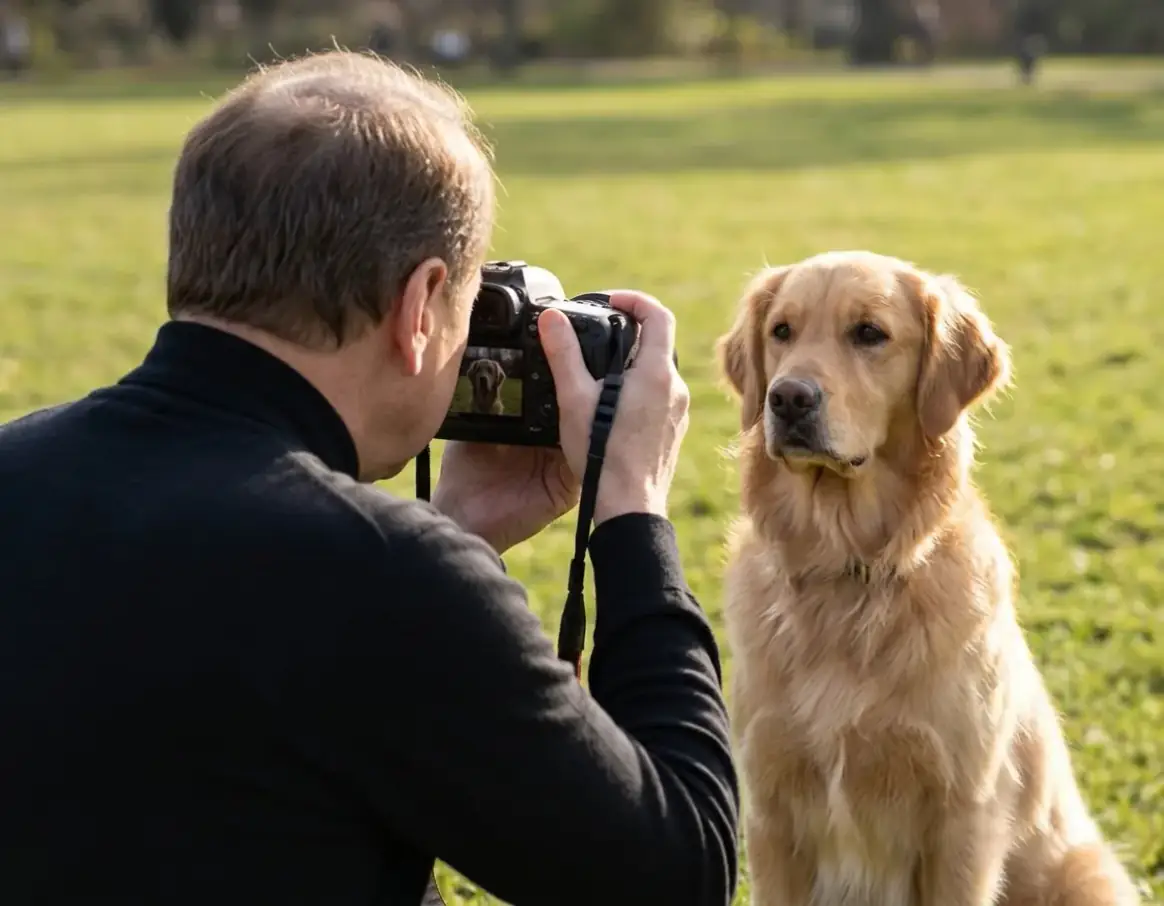
Chris McCarthyProfessional Dog Photographer · Rockland, MA · 11+ years experience
I've photographed hundreds of dogs across the South Shore and Boston since 2014 — every breed, size, age, and temperament. My own rescue, Sully, was reactive and anxious when I got him, and working with him every day taught me how to photograph dogs that other photographers find difficult. I specialize in reactive and shy dogs, seniors, and memory sessions — the sessions that matter most and need the most patience.