Vizsla Photography: Golden Coats, Athletic Movement, and the Velcro Dog Effect
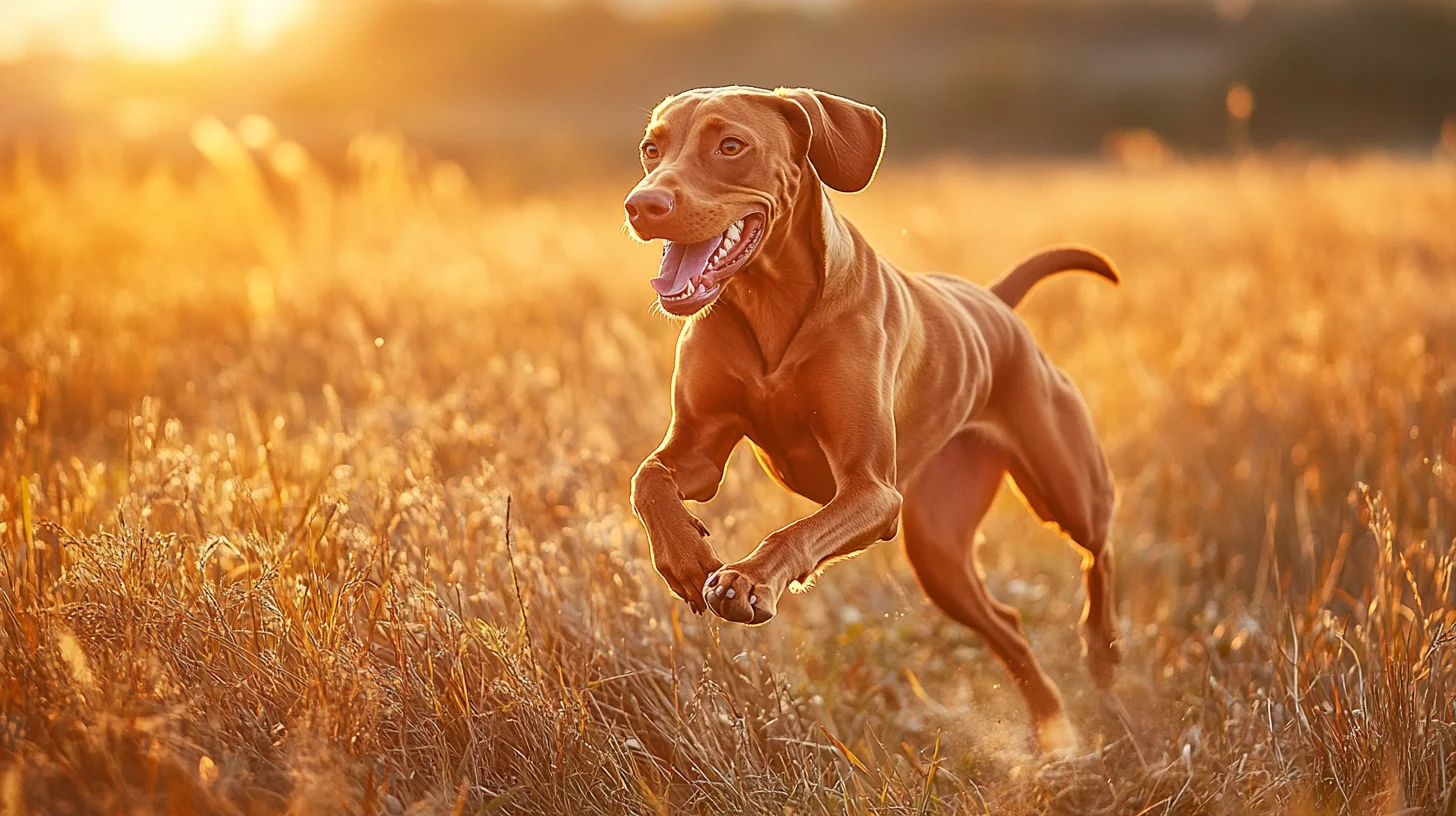
Vizslas are one of the most photogenic dogs on the South Shore, and most people who don't own one have never had a great portrait made of them. The golden rust coat, the amber eyes, the athlete's body — when the light is warm and the dog is in motion, a Vizsla portrait is one of the most striking images I make.
I've noticed that Vizsla owners often feel frustrated by the difficulty of getting good phone photos of their dogs — the short single-layer coat doesn't give the camera much to work with in flat light, and the dog's constant movement makes casual photos blurry. But with the right light and technique, the Vizsla coat is actually extraordinary. The challenge is knowing what conditions to create. This post covers what I've learned photographing Vizslas across South Shore locations.
The Golden Coat — Warm Light Is Everything
The Vizsla coat is a single, short, dense golden rust — no undercoat, no variation in texture, minimal grooming needed. Because it's so short and uniform, it doesn't provide its own visual interest the way a wavy or long coat does. Instead, the coat is a surface — and like any surface, it depends entirely on the quality and direction of the light that hits it.
It photographs best in warm light: sunrise and golden hour, when the amber tones in the light match and amplify the coat color. The color science of this is straightforward — warm light on a warm-colored coat creates tonal harmony that looks luminous. The coat seems to glow from within rather than simply reflecting light. This is the image Vizsla owners respond to most strongly when they see it.
In blue-hour or flat overcast light, the same coat can go flat and slightly muddy. The color temperature shift toward blue desaturates the warm tones in the coat and makes the golden rust look brownish and dull. I avoid scheduling Vizsla sessions under overcast skies unless we're in a location with reflective warm surfaces — autumn leaves on the ground, warm stone, dry beach grass — that can compensate.
Morning sessions in fall are consistently the best conditions for Vizslas. The sun stays at a low angle for longer in October and November, the light temperature is warm even at 8am, and the foliage creates additional warm color that the coat plays beautifully against. I'll book Vizsla clients into fall morning slots first if their schedule allows, and work around that as the anchor point for the session.
Backlight specifically — with the sun positioned just behind the dog and above the horizon — creates a rim light that traces the dog's entire silhouette in gold. On a dog with such a clean, athletic outline as a Vizsla, this effect is one of the most beautiful lighting situations in dog photography. The whole body glows at the edges while the face and expression remain visible. I plan for at least one backlit sequence in every Vizsla session.
The Athletic Movement — Built for Action
Vizslas are hunting dogs with a powerful, ground-covering trot and the ability to shift instantly to full sprint. The way they move is distinctive — a flowing, efficient athleticism that looks different from most dog breeds in motion. Action shots are almost mandatory in a Vizsla session: this breed in motion shows what they are in a way that static portraits don't fully capture.
I always plan for a running sequence in Vizsla sessions. This requires wide open space, a predictable path for the dog to run, and fast enough shutter speed to freeze the extended stride — 1/1250 at minimum, 1/2000 preferred. The extended trot, where all four legs are fully stretched and the body is at maximum extension, is the signature Vizsla action image. Getting it requires good timing and positioning — I need to be at the right angle to the direction of travel so the body reads in full profile.
The Scituate Harbor beach sections in the off-season give me the flat, open running surface I need. The Duxbury Bay beach trail is another option. Both locations give me enough distance that I can see the dog coming and position for the stride I want. I usually run multiple passes — asking the handler to recall the dog back and forth — to get the combination of position, stride, and expression that makes the definitive image.
Beyond the full sprint, I look for the Vizsla in its characteristic hunting trot — a long, ground-covering stride with the head up and the nose slightly elevated. This is a more composed motion than the sprint but equally characteristic of the breed. The trot often produces cleaner images than the full run because the stride is more regular and predictable.
The Velcro Dog Effect
Vizslas are famous for staying close to their people — “Velcro dogs” is the breed nickname, and it's earned. In a photography session, this is actually useful: they naturally return to their handler without being called, giving me portrait opportunities without having to position the dog at a distance. After every run sequence, the dog comes back to its person and I get portraits of the dog approaching, arriving, and reconnecting.
The challenge is that they often want to be in physical contact — leaning against the handler's leg, pressing close, making nose contact. This is sweet but requires some management to get clean single-dog portraits where the handler isn't in frame. I work with this tendency rather than against it: I ask handlers to stand just out of frame and let the dog face them, which gives me the forward-facing portrait position while using the handler's presence to hold the dog's attention.
The Velcro tendency also makes handler-and-dog portraits particularly natural with Vizslas. The connection between Vizslas and their people is genuine and close, and it shows in photographs without any staging. Some of the most compelling Vizsla portraits I make are the quiet moments — dog leaning against handler, both looking in the same direction, the easy physical closeness that this breed defaults to.
The Amber Eyes
The Vizsla eye color is distinctive — a warm amber that closely matches the coat color. It's genuinely rare in dog photography to have eyes and coat so tonally matched, and the visual effect in a portrait is remarkable. When the eyes are lit correctly, they look like they contain the same warmth as the coat — a unified, glowing quality that makes the whole portrait feel warm.
I'll often get low and close specifically to capture the eye color in warm light — the depth and warmth of those eyes in a tight portrait is one of the most technically beautiful features of the breed. I use a wide aperture (f/2 to f/2.8) for these close eye portraits, focused sharply on the near eye, with the warm light source positioned to put a clean catchlight in the center or upper third of the iris.
The eye portraits work especially well in golden-hour backlight — the warm rim on the coat transitions to the warm amber of the eyes, and the catchlight in the backlit eye has a distinctive quality that differs from front-lit catchlights. It's a subtler, softer catchlight that suits the depth of the amber iris better than the bright point of a front-lit sun catchlight.
Best South Shore Locations for Vizslas
Open terrain with room to run and warm-light windows is the baseline requirement for Vizsla sessions. Dense forest locations reduce the light quality and eliminate the running sequences that are essential to this breed's portrait story. I need sight lines and open sky.
Duxbury Beach in the off-season is one of my most-used Vizsla locations — the flat, firm sand, the open ocean light, and the long beach corridor give me everything I need for action work, and the early morning light coming from the east over the water has the warm color temperature that makes the coat glow. The beach is relatively quiet in October and November, which is also when the morning light is best.
World's End in Hingham gives me the dramatic headland landscapes that show a Vizsla's athletic quality in context — the dog on the exposed ridge, the ocean behind, the warm light from the side. The open meadow sections are good for running sequences as well. The Norwell marshes in fall, when the grass goes golden, create a warm background that pairs beautifully with the coat color.
The open meadow sections of Borderland State Park in Easton and Sharon also work well for early-morning light sessions — the meadow opens to the east and catches the rising sun at a low angle for a useful window each morning.
If you're considering a session for your Vizsla, take a look at my Best Dog Ever session — it's the right format for a breed that needs both action work and portrait work in a single session. And if you're researching locations, the guide to the best dog photo locations on the South Shore covers the specific spots I use and the conditions at each one.
Photographing a Vizsla on the South Shore?
Sessions start at $395. I specialize in working with athletic, people-focused breeds and know exactly how to use warm light to make that golden coat glow.
Book a session →Photographing a different breed? Browse browse the full breed index for the full lineup.
“It was so fun and easy to work with Chris, and our dogs loved him, too! The photos and artwork are beautiful! Highly recommend booking a session.”
About the Author
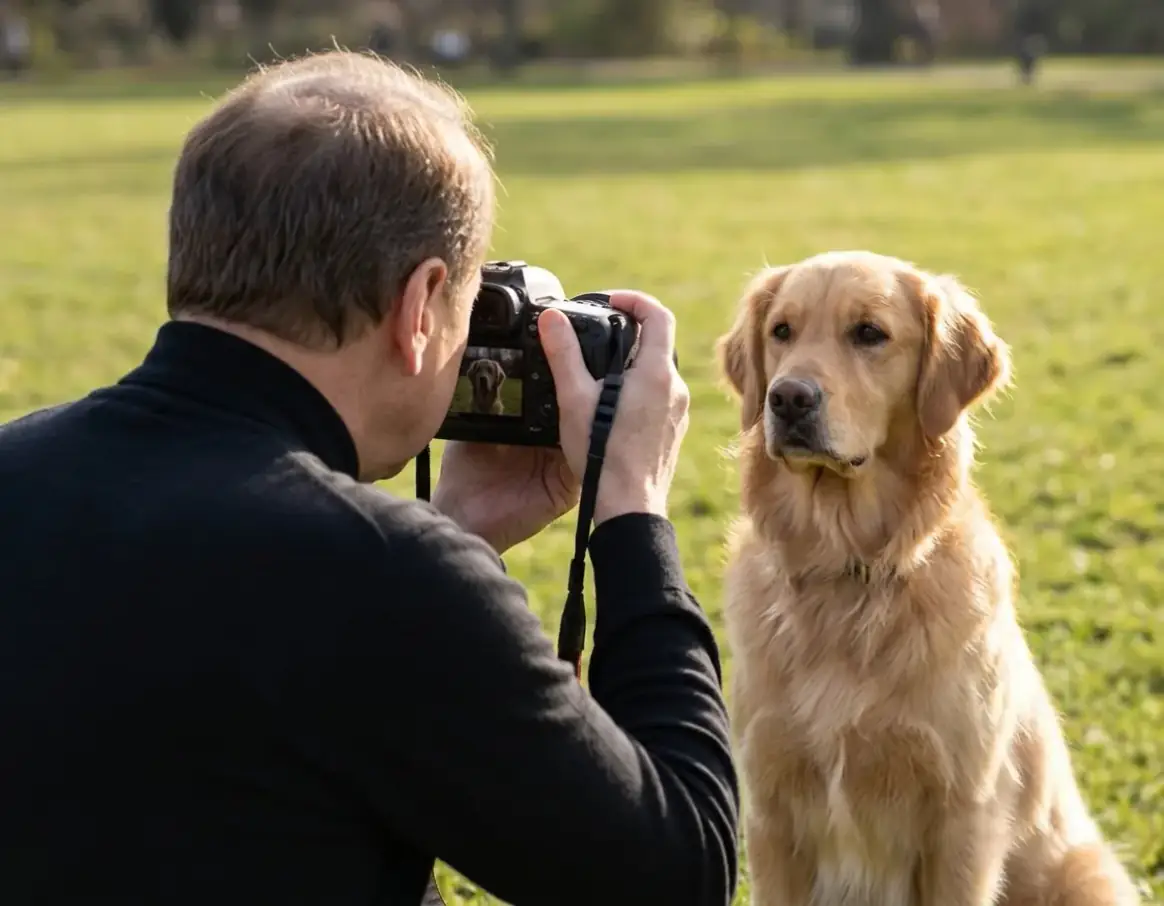
Chris McCarthyProfessional Dog Photographer · Rockland, MA · 11+ years experience
I've photographed hundreds of dogs across the South Shore and Boston since 2014 — every breed, size, age, and temperament. My own rescue, Sully, was reactive and anxious when I got him, and working with him every day taught me how to photograph dogs that other photographers find difficult. I specialize in reactive and shy dogs, seniors, and memory sessions — the sessions that matter most and need the most patience.