Dachshund Photographer on the South Shore, MA
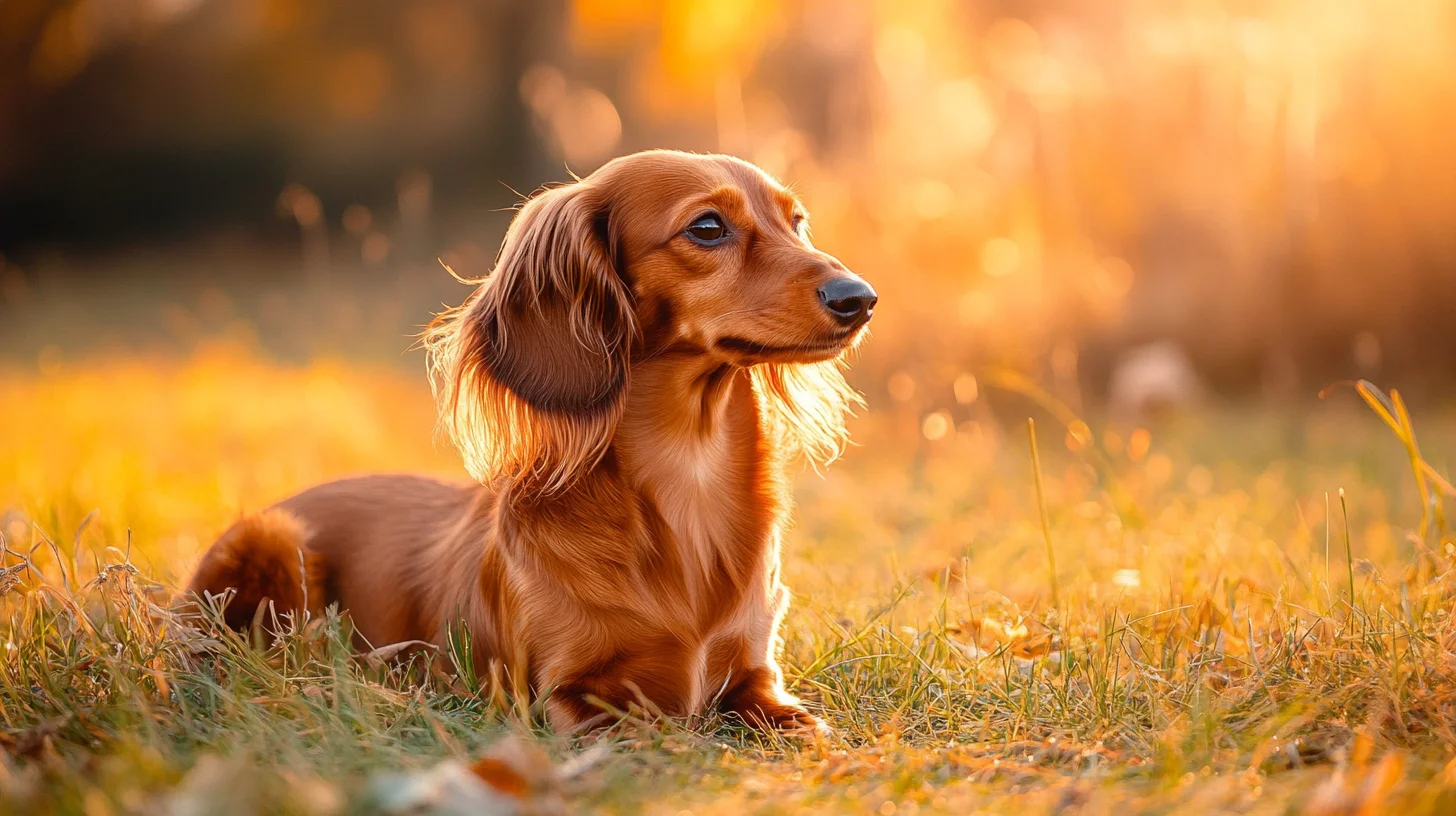
Dachshunds are one of the most distinctive breeds to photograph — and one of the most frequently photographed poorly. The long body, the low-to-the-ground stance, the dramatic coat variety, and the enormous personality packed into a surprisingly compact frame: these qualities demand a specific technical approach that most photographers never think about because they are not working with the breed regularly.
I photograph dachshunds on the South Shore regularly, and over time I have worked out the camera positions, the locations, and the timing approaches that produce portraits worthy of the breed. Here is how I think about it.
1. The Camera Angle Problem — Why Low Matters
The single biggest mistake in dachshund photography is shooting from standing or waist height. From above, the dachshund's proportions are exaggerated in the worst way — the long back dominates the frame, the legs nearly disappear, and the face gets foreshortened against the body. You end up with an image that looks like a photograph of an elongated oval with ears, rather than a portrait of a dog.
The correct camera position for a dachshund is at or below their eye level — which means lying prone on the ground for a standard dachshund, and sometimes crouching at shin height for a miniature. From this position, the long body reads as depth behind the face rather than width across the frame. The legs become visible and proportionate. The expression is readable and direct.
This is not a subtle adjustment — it is a complete change in where you put your body. Portrait photographers who are accustomed to working with larger breeds often resist it because it feels awkward. But for dachshunds, it is the difference between a documentary snapshot and a real portrait. I spend significant portions of dachshund sessions with my chest on the ground, and the images are always better for it.
2. Coat Variety — Three Very Different Technical Problems
The three dachshund coat varieties — smooth, longhaired, and wirehaired — are not just different aesthetically. They are different photographic subjects that require meaningfully different approaches to light and location.
Smooth-coated dachshunds have a short, dense coat that catches and reflects light sharply. This means the coat shows highlights and shadows clearly, which is beautiful when the light is right but unforgiving when it is not. Harsh midday light on a smooth red or chocolate dachshund produces blown highlights along the topline that are nearly impossible to recover. I prefer early morning side-light for smooth coats — the low angle creates texture across the body rather than flat overhead illumination.
Longhaired dachshunds are the most photogenic variety in most conditions. The feathering on the ears, chest, and legs catches light beautifully, and the soft, flowing coat texture reads well against almost any background. Fall foliage is particularly spectacular with longhaired dachshunds — the warm tones of the coat blend harmoniously with orange and amber backgrounds in a way that looks almost designed.
Wirehaired dachshunds are the most textured and rugged of the three varieties, and they suit a more editorial, naturalistic portrait style. The beard and eyebrow furnishings give the face enormous character. I photograph wirehaired dachshunds with a slightly tighter crop and more emphasis on facial detail — the face is doing so much work that full-body compositions sometimes undersell it.
3. Framing the Long Body — Compositional Choices
Once you have the camera low, you have to decide what to do with the long body in the frame. There are three main compositional approaches, and each produces a different aesthetic result.
The first approach is the full-body profile, where the dachshund is positioned side-on to the camera at low angle. This shows the breed's silhouette in full — the long spine, the deep chest, the short legs, the characteristic outline that makes a dachshund instantly recognizable from any distance. It is the most iconic compositional choice and the one most dachshund owners respond to most strongly.
The second approach is the three-quarter forward, where the dog is angled toward the camera with the face as the primary subject and the long body receding into depth behind it. From this position, the body becomes context rather than subject — it establishes the breed without dominating the composition. This works particularly well for portraits where expression and character are the primary storytelling goal.
The third approach is the tight face portrait, with the long body entirely excluded from the frame. This is not a breed-typical composition, but for dachshunds with exceptional facial expressions — the wirehaired variety in particular — a tight crop that eliminates the body and focuses entirely on the eyes, nose, and beard produces images with surprising emotional impact. Use it selectively, but do not be afraid of it.
4. South Shore Locations for Dachshund Portraits
Location selection for dachshunds involves a specific consideration that does not apply to larger breeds: terrain. A dachshund's short legs mean that tall grass, deep sand, or rocky terrain can make movement difficult, uncomfortable, or simply impractical for portrait purposes. I steer dachshund sessions toward locations with manageable surfaces and accessible paths.
On the South Shore, the conservation trails at Norris Reservation in Norwell work particularly well — the woodland trail surfaces are flat and clear, and the forest understory provides a beautiful backdrop at dog's-eye level when I am lying prone for my camera angle. The Duxbury Bay area locations with their compact firm-packed sand at the water edge also work well in the right tide conditions.
For fall foliage sessions with longhaired dachshunds specifically, World's End in Hingham gives an open meadow and path surface that keeps the dog comfortable while the color and light are exceptional. I have done autumn portraits of longhaired dachshunds at World's End that remain among my favorite images of the breed — the combination of russet coat and amber foliage with soft October backlight is genuinely extraordinary.
For reactive or anxious dachshunds — and the breed can run hot on new environments — I default to quieter locations like the conservation trails in Hanson or the Norris Reservation on a weekday morning. Low traffic, manageable terrain, and familiar woodland character give nervous dogs the environment they need to settle into a session.
5. Managing Dachshund Energy and Attention
Dachshunds are scenthounds. They were bred to follow scent trails into burrows, which means they are wired to have their nose on the ground and their attention on the environment rather than on the person in front of them. This is one of the primary behavioral challenges in the breed from a portrait photography perspective, and it is one I work around rather than fight.
The core technique is working with the dog's natural head position rather than constantly pulling their attention upward. Many of the most effective dachshund portraits have the dog looking slightly downward or to the side — not at the camera — because that position is natural for the breed and reads as confident and characterful rather than inattentive. Forcing sustained direct eye contact with a scenthound often produces images of a dog who looks stressed and uncomfortable.
When I do want direct eye contact — and there are moments in most sessions where it becomes available naturally — I use very brief attention-getters: specific sounds, very short verbal cues, occasionally a high-value treat held directly at lens level. The goal is a two-to-three second window of alert, direct attention, not sustained focus. I am shooting continuously and looking for those moments rather than engineering them. With dachshunds, patience and opportunism produce better images than control.
Frequently Asked Questions
What is the best location for dachshund portraits on the South Shore?
Locations with flat or firm-packed trail surfaces work best — the short legs make rocky or very soft terrain difficult. Norris Reservation in Norwell, World's End in Hingham, and the conservation trails in Hanson are all solid choices depending on the time of year and the individual dog's temperament. I discuss terrain and access with every dachshund client in the pre-session call.
Do all three coat varieties require different approaches?
Yes — smooth, longhaired, and wirehaired coats are technically different portrait subjects. Smooth coats require careful light management to avoid harsh highlights. Longhaired coats are beautiful in almost any condition and especially spectacular in fall color. Wirehaired coats have tremendous facial detail that rewards tight cropping. I adjust my location and timing recommendations based on which variety your dog is.
My dachshund never looks at the camera. Can you still get good portraits?
Yes — this is normal dachshund behavior. Scenthounds are not naturally camera-focused, and I work with that rather than against it. Many of the best dachshund portraits have the dog looking slightly away or downward, which reads as characterful and natural rather than inattentive. I do capture direct-look moments opportunistically, but they are not the only goal in the session.
What season is best for dachshund portraits on the South Shore?
Fall is the strongest season for dachshunds — particularly longhaired dachshunds whose coat tones harmonize beautifully with autumn foliage. Spring and early summer are excellent for the meadow and conservation trail locations. Summer heat is the main consideration: shorter morning sessions in shaded locations suit the breed's lower-to-ground body temperature management well.
Pro Tip
“A longhaired dachshund photographed at World's End in October — low angle, backlight through the meadow grass, warm amber coat against golden foliage — is one of the most stunning breed portraits I produce. The color harmony between the coat and the fall palette is genuinely exceptional. Book before September if fall is your target.”
Book a Dachshund Session
Let's talk about your dachshund — coat variety, temperament, and what you're hoping to capture — and find the right location and approach for the portrait they deserve.
Signature portrait sessions, senior dog portraits, or memory sessions — sessions start at $395.
Keep Reading
BREED GUIDE
Golden Retriever Photography on the South Shore
Backlight technique, eye catchlight, location picks, and energy management for golden retrievers.
BREED GUIDE
Bernedoodle Photographer on the South Shore
How to handle the tricolor coat and curly texture of bernedoodles for South Shore dog portraits.
BREED GUIDE
Corgi Photography on the South Shore
Sister low-to-the-ground breed work — corgi posing, expressions, and short-leg framing.
Photographing a different breed? Browse all the breeds I cover for the full lineup.
“It was so fun and easy to work with Chris, and our dogs loved him, too! The photos and artwork are beautiful! Highly recommend booking a session.”
About the Author
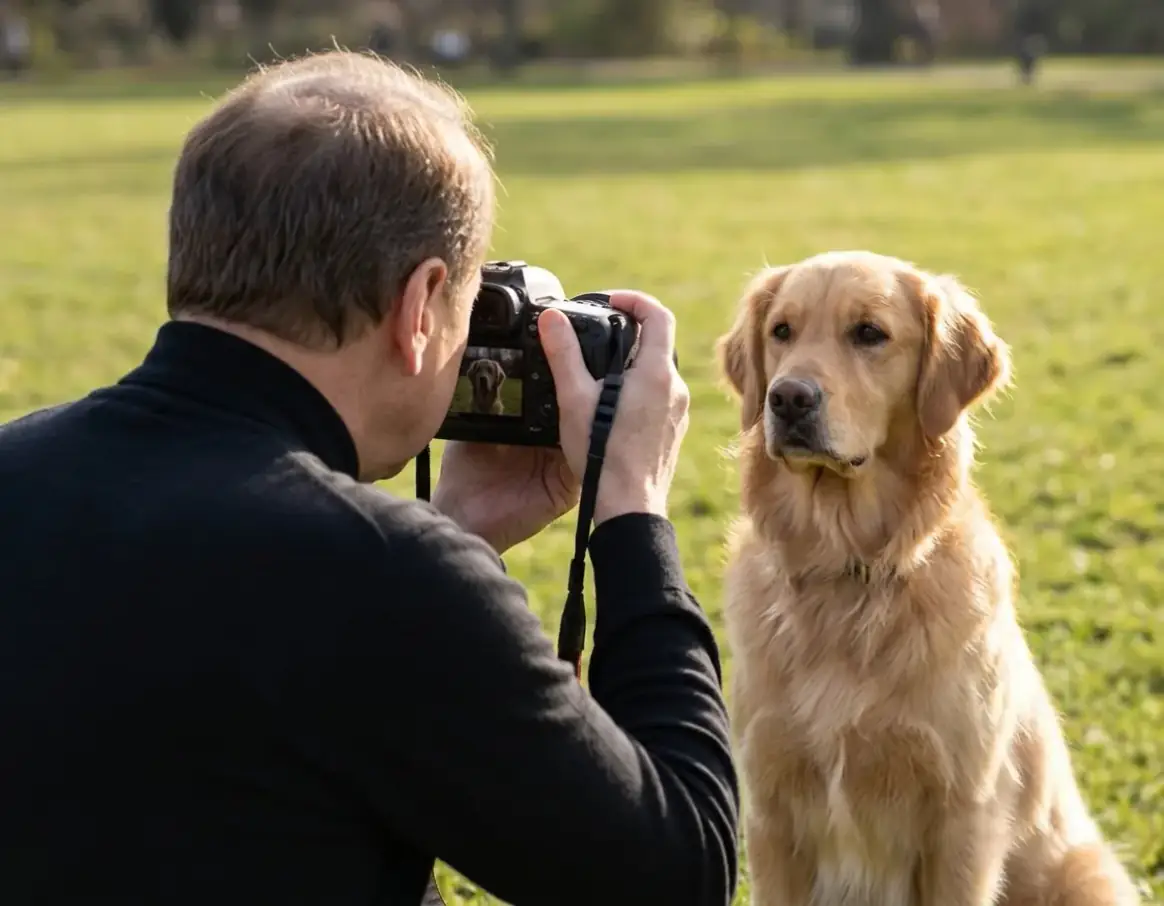
Chris McCarthyProfessional Dog Photographer · Rockland, MA · 11+ years experience
I've photographed hundreds of dogs across the South Shore and Boston since 2014 — every breed, size, age, and temperament. My own rescue, Sully, was reactive and anxious when I got him, and working with him every day taught me how to photograph dogs that other photographers find difficult. I specialize in reactive and shy dogs, seniors, and memory sessions — the sessions that matter most and need the most patience.