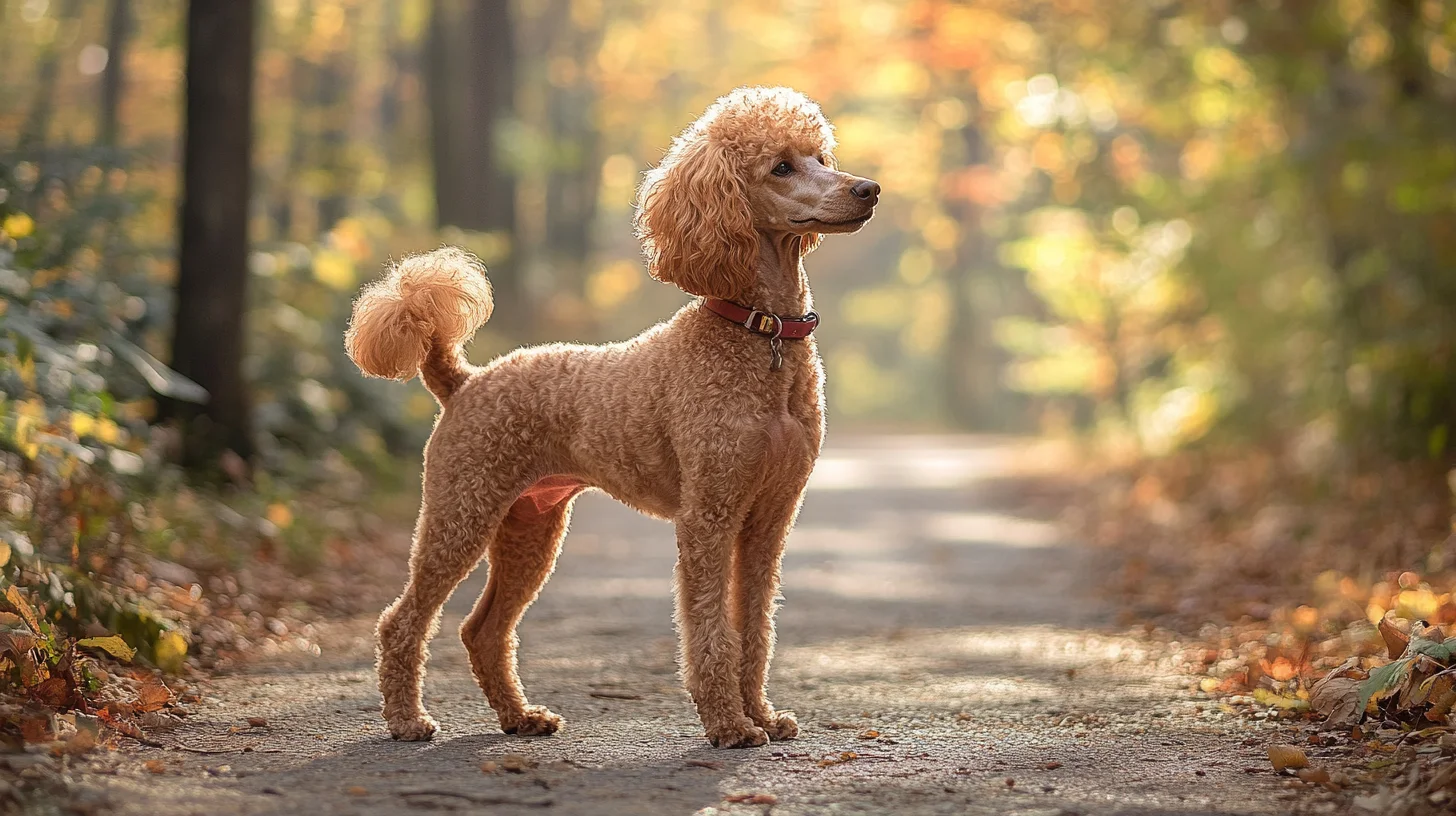
Poodles have a reputation as prissy show dogs. The Poodles I photograph on the South Shore are nothing like that — they're athletic, highly intelligent, genuinely curious dogs who happen to have one of the most technically interesting coats in dog photography. Getting a great Poodle portrait requires understanding both the coat and the breed.
The Curly Coat: Rim Lighting Is the Answer
Poodle coats are dense, tightly curled, and come in a remarkably wide color range — black, white, cream, apricot, red, chocolate, silver, and parti. Each color presents its own challenges, but they all share one requirement: the coat needs directional light to show its texture.
A tightly-curled Poodle coat in flat light looks like a solid mass. Individual curls aren't visible, the texture disappears, and the coat reads as flat and shapeless. Rim lighting — positioning the dog so the light source is behind and slightly to the side — changes this completely. Each individual curl catches the light, the entire coat takes on dimension and depth, and the color reads clearly rather than washing out.
For white and cream Poodles, this is especially critical. White coats in direct frontal light blow out to a featureless bright mass. In rim light with a slightly underexposed setting that exposes for the coat highlights, white Poodles show a dimensional, luminous quality that photographs beautifully.
Black Poodles need the same directional light but for the opposite reason: without it, the dark coat absorbs light and the dog goes dark. Side or rim lighting adds specular highlights to the coat surface that reveal texture and give the coat its characteristic sheen.
Showing the Carriage
Standards especially have a carriage — a proud, upright bearing and clean proportions — that's part of what makes the breed visually distinctive. This is best captured in full-body or three-quarter body shots where the long neck, square frame, and the clean head-to-body proportions are all visible.
Too tight a crop loses the carriage and you end up with a generic dog portrait. Too wide a shot loses the detail in the face and coat. The sweet spot is a three-quarter crop at a low camera angle — showing the full length of the dog while keeping the face prominent and the coat texture visible.
“The best Poodle portraits are made at the exact moment the dog shifts from looking around to looking directly at me with that calm, focused attention. You have maybe two seconds.”
The Eyes: Intelligence in Frame
Poodle eyes are dark, almond-shaped, and genuinely expressive. When a Poodle is focused on something — a treat, a sound, an unusual movement — there's a quality of direct, calm intelligence in the expression that's photographically powerful. This isn't the goofy joy of a retriever or the intense fixation of a herding breed — it's something more composed, more watchful.
I wait for this expression deliberately. The best Poodle portraits are made at the exact moment the dog shifts from looking around to looking directly at me with that calm, focused attention. You have maybe two seconds. The timing takes experience with the breed.
Photographing a Poodle on the South Shore?
Sessions start at $395. Standard, miniature, or toy — let's make portraits that show what Poodles actually are.
See the Poodle photographer pageOther Breed Guides
Related guide: Goldendoodle Photography on the South Shore — half the goldendoodle genetics — sister breed coat and session technique.
“It was so fun and easy to work with Chris, and our dogs loved him, too! The photos and artwork are beautiful! Highly recommend booking a session.”
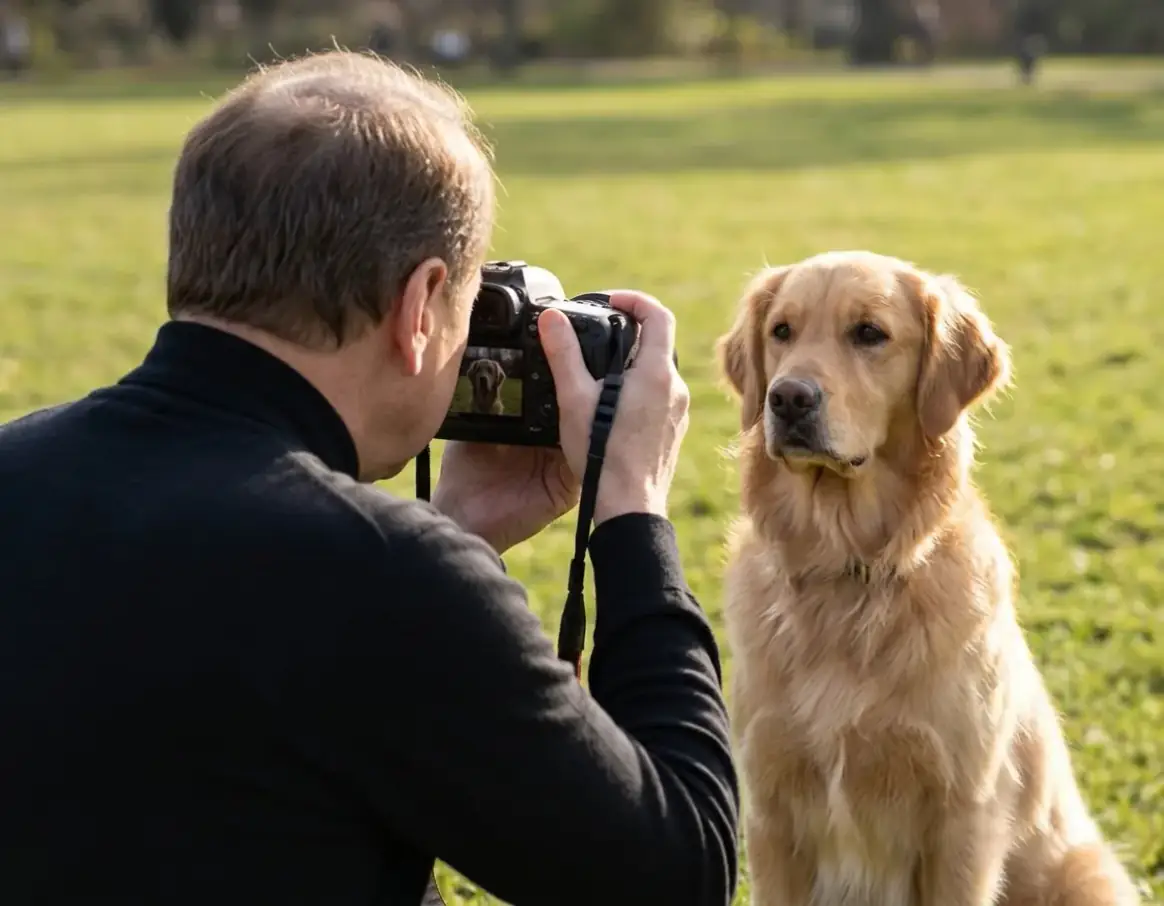
About the Author
Chris McCarthyProfessional Dog Photographer · Rockland, MA · 11+ years experience
I've photographed hundreds of dogs across the South Shore and Greater Boston since 2014 — every breed, size, age, and temperament. My own rescue, Sully, was reactive and anxious when I got him, and working with him every day taught me how to photograph dogs that other photographers find difficult. I specialize in reactive and shy dogs, seniors, and memory sessions — the sessions that matter most and need the most patience.